While at the University of Zurich, my primary focus was doing some of the first psycholinguistics on Shipibo-Konibo. Shipibo makes it possible to study a number of features that are not available in languages which are traditionally used in psycholinguistics.
Shipibo-Konibo is an indigenous language in the Panoan family, from the Peruvian Amazon. It is spoken by ~30,000 people along much of the Ucayali river. Most speakers continue to live in villages along the river throughout their traditional territory, but the largest single group lives in and around the city of Pucallpa.
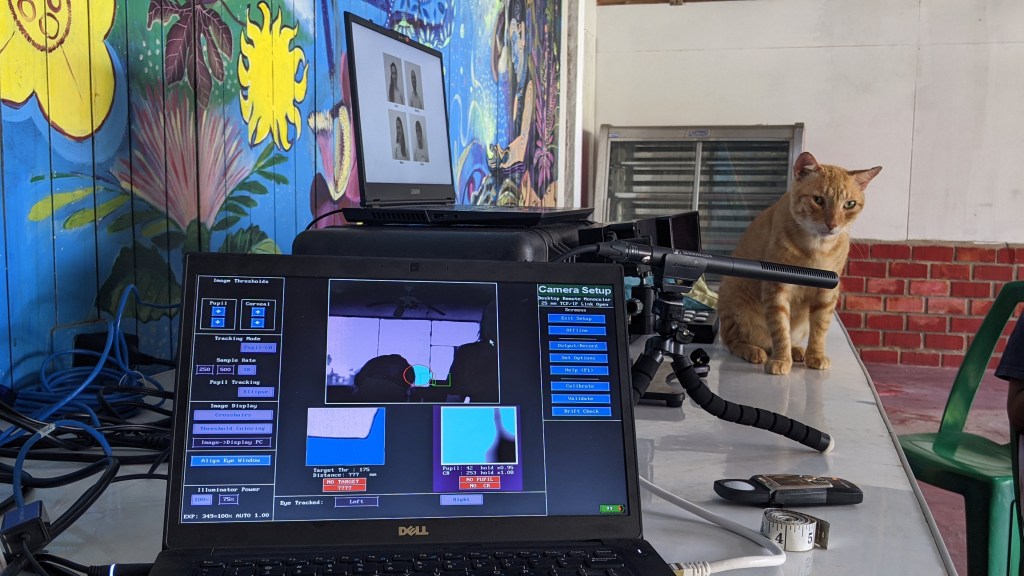
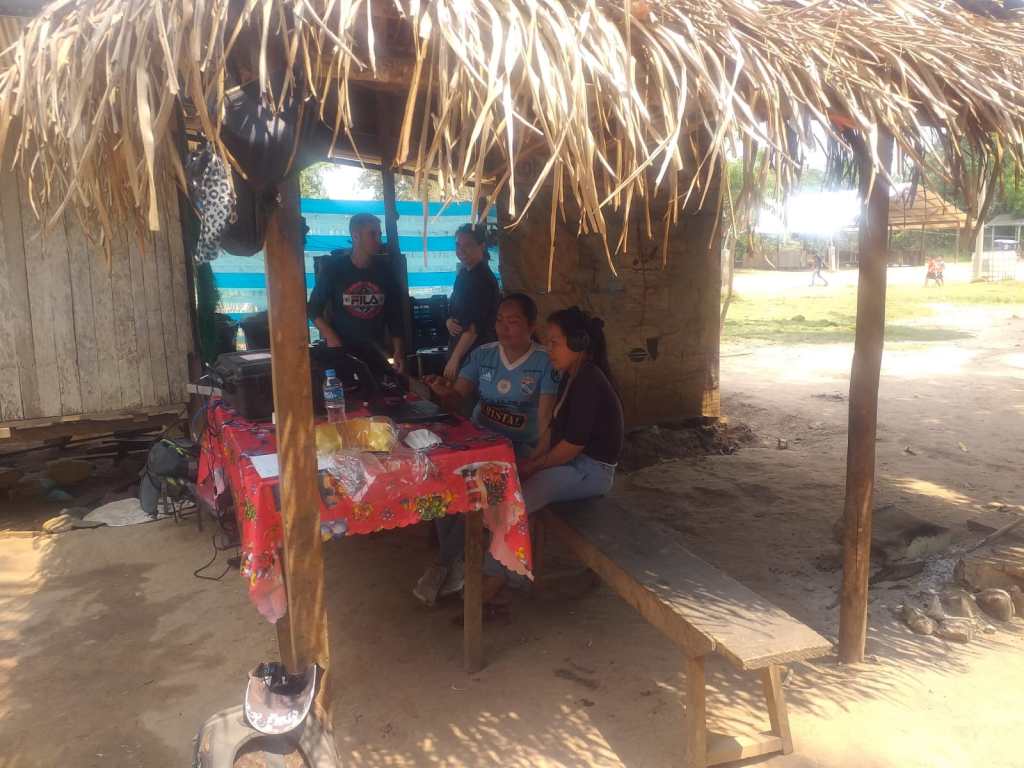
My work on Shipibo is really several projects in one. I use eyetracking, picture-word interference, and picture description methodologies to study ergative case, ergativity, evidentiality, and switch reference. Where most ergative languages have substantial “splits” (parts of the grammar are ergative and other parts are not), Shipibo is known for being especially consistent in its ergative marking (Valenzuela, 2003). This makes it a particularly valuable test case. Currently we have fully collected data from two pilot studies and three full studies which are being written up for publication.
Eres miembro del pueblo Shipibo konibo y deseas saber más acerca de esta investigación? Ponte en contacto conmigo: caroline <punto> andrews <@> ling-phil <punto> ox <punto> uk
Shipibo Konibo joni ikax itan mia nokon “investigación” omankasai, ea wishawe: caroline <punto> andrews <@> ling-phil <punto> ox <punto> uk
 Caroline Andrews